Okay, real talk — when you hear terms like “web framework” or “backend development,” does your brain do a little static noise? Maybe you’re a Python enthusiast, but the leap to building actual websites feels like climbing Mount Everest. Don’t worry, you are absolutely not alone. Many aspiring developers feel this way. It’s a common hurdle, but one you can easily overcome.
What Exactly is Flask? (The Super Simple Version)
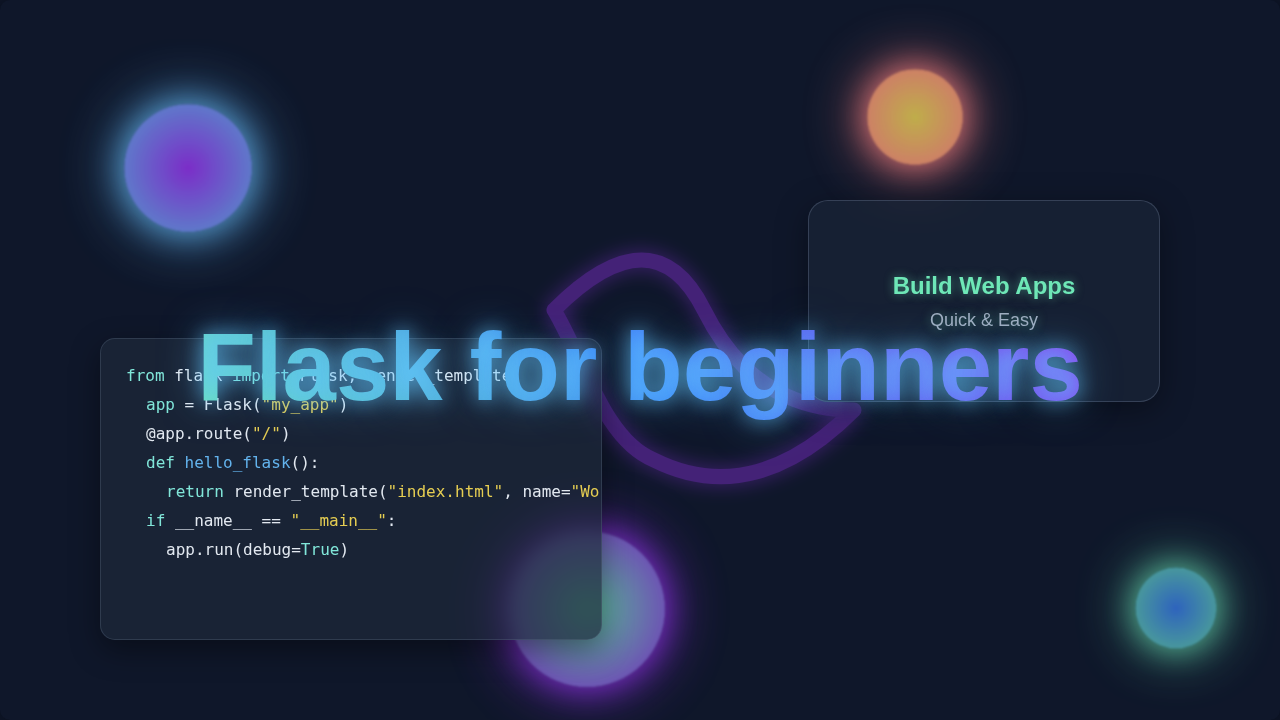
Today, we’re going to demystify one of the coolest tools in a Python developer’s arsenal: Flask. Think of Flask as a tiny, super-efficient toolkit for building websites using Python. It’s often called a “micro-framework.” This means it offers just the essentials you need to get a web application up and running. It doesn’t come with every bell and whistle pre-installed, unlike some heavier frameworks. This minimalist approach is exactly what makes Flask for beginners such a fantastic starting point. You get to add only what you need, learning each piece as you go. Therefore, it keeps things simple and focused.
Why Flask Matters for Beginners Like You
So, why should you care about Flask? Here’s the thing: mastering Flask opens up a whole new world of possibilities. You can start building your own web applications, like personal blogs, simple e-commerce sites, or even tools to automate tasks. You know, like a Python Task Manager Script: Backend Automation with Flask Logic. Imagine creating a simple site where you can track your daily habits or manage your to-do list. Flask makes this achievable, even if you are just starting out. It helps you translate your Python skills into something visible and interactive on the web. The cool part is, you don’t need to learn a million new concepts all at once. Flask lets you focus on the core logic. This framework is your bridge from writing scripts to crafting interactive web experiences. Thus, your coding journey gets a significant upgrade.
Pro-Tip for Beginners: Don’t try to learn everything at once! Focus on understanding the core concepts: routing, requests, and responses. Get a simple “Hello, World!” working. Then, gradually add more features like templates or forms. You’re building a foundation, not a skyscraper immediately.
How Flask Actually Works (Behind the Scenes)
How does Flask, this seemingly magical toolkit, actually work its wonders? Let’s break it down. At its core, a web application is all about requests and responses. When you type procoder09.com into your browser and hit Enter, you’re sending a “request.” Your browser is asking a server for information. Flask acts like a friendly receptionist for your server. It listens for incoming requests. When a request arrives, Flask figures out which “route” it should follow. A route is like a specific instruction set for a particular web address. For instance, / might be your homepage route. /about would be your “About Us” page. Flask then runs a Python function connected to that route. This function does whatever is needed. Maybe it fetches some data from a database. Perhaps it just prepares a simple message. Finally, Flask creates a “response” — often an HTML page — and sends it back to your browser. Your browser then displays that page for you. This whole process happens in a blink of an eye. Think of it like ordering food: you (browser) make a request to the server (restaurant), Flask (waiter) takes your order to the kitchen (Python function), the kitchen prepares it, and Flask brings your meal (HTML response) back to you. Make sense so far?
Getting Started with Flask for Beginners: Your First Steps
Alright, so you understand the basic idea. Now, how do you actually begin building something with Flask? It’s simpler than you might think. First, you’d usually install Flask using Python’s package manager, pip. Think of it as adding a new, specialized tool to your workshop. Once installed, you’d write a small Python file. This file would contain the instructions for your web app. You’d tell Flask what to do when someone visits a specific web address, like your homepage. You’d define a special Python function for this. This function would return some text, perhaps “Hello, World!” for your very first try. That text then becomes the content displayed in the browser. You’re effectively mapping a URL path to a Python function that generates a response. This fundamental concept of routing is how all web frameworks guide requests to the correct logic. Learning about how HTTP works on MDN Web Docs can really solidify this understanding. It gives you the foundation for all web interactions.
Common Confusions About Flask, Cleared Up
Many beginners have a few common questions when they first meet Flask. Let’s tackle them head-on, shall we?
First, “Is Flask a full website or just a part of it?” Flask is the backend of your website. It handles the server-side logic, data processing, and sending information. It’s like the engine and chassis of a car. You still need the frontend — the paint job, the seats, the dashboard — to make it look good and interact with. This usually involves HTML, CSS, and JavaScript. Flask prepares the content, but your browser renders how it looks. You build the structure and content, while the browser displays it.
Second, “Is Flask only for small projects?” Not at all! While its ‘micro’ nature makes it great for small projects and learning, Flask is incredibly scalable. You can build large, complex applications with it. Many real-world services use Flask, powering everything from APIs to large web apps. Its modular design allows you to add powerful extensions as your project grows. For example, you could even build a Flask REST API Tutorial: Build a RESTful Service with Python if you wanted. This shows its true flexibility.
Third, “Do I need a database right away?” No, you don’t. You can build simple Flask apps that don’t use a database at all. They might just display static content or data stored in Python variables. As your projects get more complex, then you’ll likely want to integrate a database like SQLite or PostgreSQL. Flask doesn’t force you into any specific choice, which is a huge plus. This freedom lets you choose the best tool for your project.
Key Takeaways for Your Flask Journey
Let’s recap what we’ve covered about Flask. These points are worth remembering as you continue your learning:
-
Lightweight and Flexible: Flask gives you the bare necessities. This means you have more control. You only add what your project truly needs. This is perfect for learning and custom solutions. It empowers you to make your own choices.
-
Pythonic: If you already know Python, Flask will feel incredibly natural to you. You’ll be using familiar concepts and syntax. Your existing skills translate directly.
-
Building Blocks of the Web: You’ll learn fundamental web development concepts. Things like HTTP requests and responses, routing, and server-side processing. These are universal skills. You can even explore how API Rate Limiting Explained works once you build your own. This will deepen your understanding of web architecture.
-
Great for APIs: Flask is excellent for creating Application Programming Interfaces (APIs). These are ways for different software applications to talk to each other. They are the backbone of many modern web services.
Friendly Reminder: Flask won’t build your entire website for you. It’s a tool. Your creativity and problem-solving skills are the real builders. Think of Flask as your trusty hammer; you still need to swing it! Your effort is key.
Learning Flask for beginners might seem daunting at first. However, I promise you, it’s one of the most rewarding steps you can take in your web development journey. You already have a strong foundation with Python. Now, you’re just learning how to connect that power to the web. Start small. Experiment often. Break things, then fix them. That’s how you truly learn. The web is waiting for your creations, and Flask is here to help you bring them to life. You’ve got this! Keep coding, keep building, and soon you’ll be creating amazing web applications of your own. Your potential is limitless.