Understanding CORS: Why Your Browser Blocks Requests (and How to Fix It)
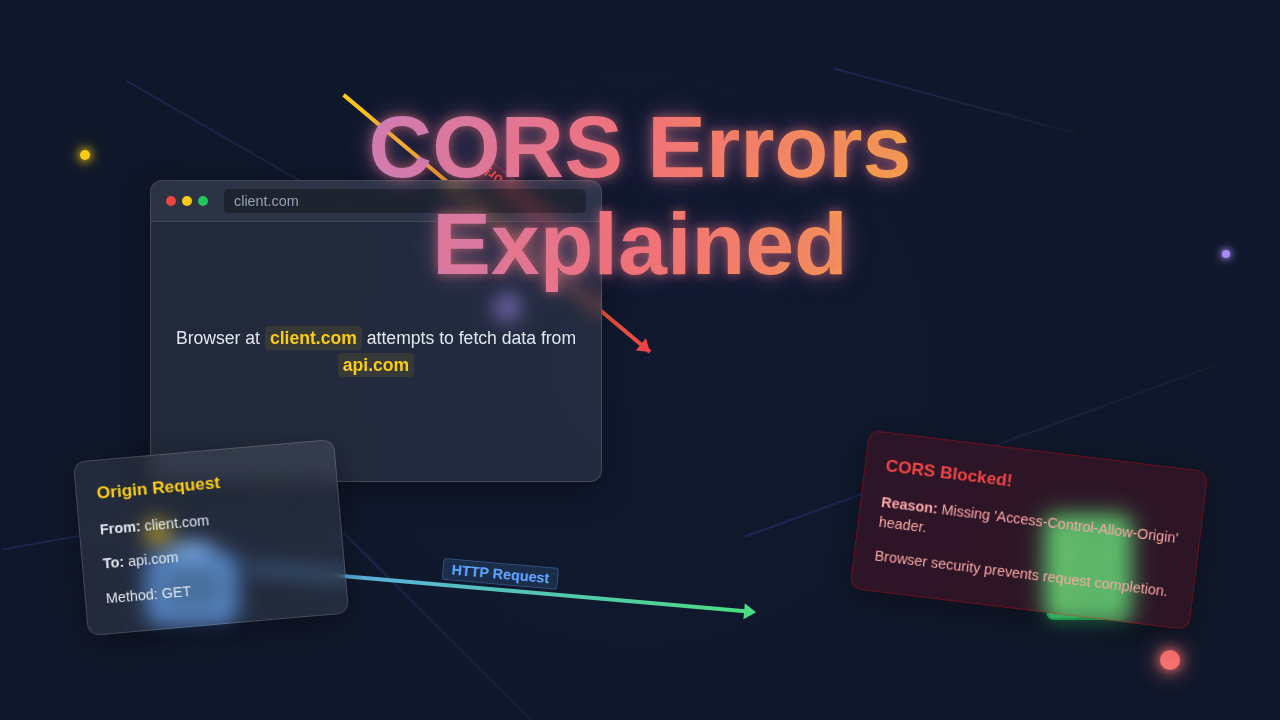
Hello! If CORS sounds like a made-up word to you right now, you are not alone. You’ve probably run into cors errors explained and wondered — why does this not work? Here’s the thing… CORS stands for Cross-Origin Resource Sharing, which is a security feature that helps protect your data.
CORS Errors Explained: The Basics
Ever wondered why your browser blocks requests? It’s because of CORS. You see, when you make a request to a different domain, your browser checks if that domain allows requests from your domain. The cool part is, you can allow or block requests using headers.
Myth 1: CORS is Only for Security
Sound familiar? You might think CORS is only for security, but it’s not. It’s also about sharing resources between domains. Don’t worry — it clicks eventually. You’ll see that CORS is like a bouncer at a club, deciding who gets in and who doesn’t.
CORS Errors Explained: The Different Types
Make sense so far? There are two types of CORS requests: simple and preflighted. Simple requests are like a quick hello, while preflighted requests are like a background check. You need to understand the difference to fix cors errors explained.
Tip: When dealing with CORS, think of it like a conversation between two domains. You need to set the right headers to allow the conversation to happen.
Myth 2: CORS is Hard to Implement
Here’s the thing… implementing CORS isn’t that hard. You just need to set the right headers and configure your server. You can learn more about configuring servers in our Flask CRUD Tutorial. It’s like setting up a new phone — you need to configure the settings to make it work.
CORS Errors Explained: Common Issues
Ever wondered why your requests are being blocked? It’s probably because of a misconfigured server or a missing header. The cool part is, you can fix these issues by checking your server logs and adjusting your headers. You can also learn more about debugging in our React useEffect Hook tutorial.
Myth 3: CORS Only Applies to APIs
Don’t worry — it’s not just APIs. CORS applies to any request that crosses domains. You might need to deal with CORS when building a responsive navbar that makes requests to a different domain. It’s like building a bridge between two islands — you need to make sure it’s safe and secure.
Tip: When building web applications, think about CORS from the start. It’s like planning a road trip — you need to consider the route and the rules of the road.
For more information on web development, check out MDN’s CORS documentation or CSS-Tricks’ guide to CORS.
The Truth About CORS
So, what’s the truth about CORS? It’s not that complicated. You just need to understand how it works and how to configure it. You can do it! You’ve made it this far, and now you know more about cors errors explained. Keep learning, and you’ll become a pro at dealing with CORS in no time.