React Prop Drilling: A Component Tree Visualization
Hello! If you have ever felt like you are playing a game of digital telephone with your data in React, you are definitely not alone. You pass a piece of information from one component to another, then to another, and another, until it finally reaches its destination. Sound familiar?
This common headache has a name: React Prop Drilling. It is a bit like digging a tunnel through layers of rock just to get a single message to a friend on the other side. You know there must be an easier way, right? Today, we are going to demystify prop drilling, understand why it happens, and arm you with elegant solutions.
What Exactly Is React Prop Drilling?
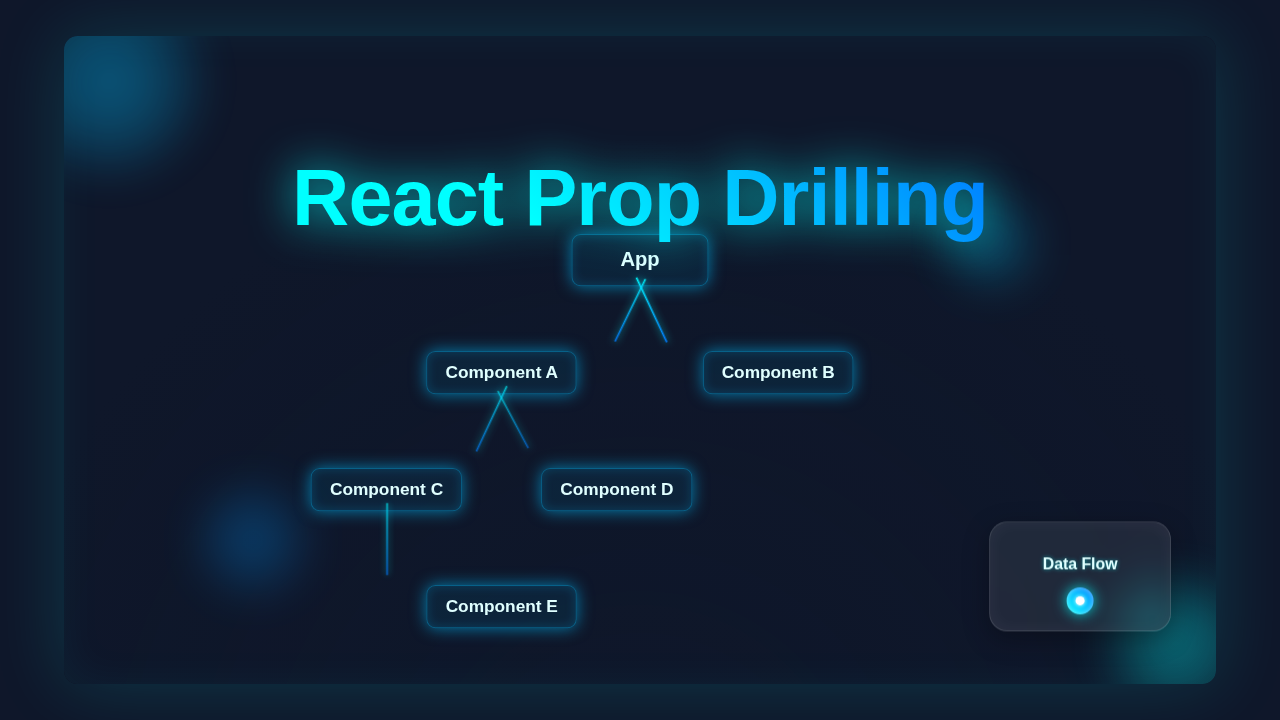
Think of your React application like a family tree, but for components. At the top, you have your main parent component. Below it, there are children, then grandchildren, and so on. Data in React often flows downwards, from parent to child, using something called props. Props are like little messages or gifts that a parent component gives to its direct child.
Now, imagine you have a very special toy. You want your youngest grandchild to have this toy. But your grandchild is many levels down the family tree. So, you give the toy to your child. Your child then passes it to their child (your grandchild’s parent). Then, that parent passes it to the grandchild. Each person in the middle did not actually need the toy themselves. They were just carriers.
That is React Prop Drilling in a nutshell. It is when you pass data through several layers of components in your component tree. Many of these intermediate components do not even use that data. They simply act as conduits. They only exist to forward the props further down the chain. You might find yourself doing this without even realizing it. It feels like the natural way, at first.
Pro Tip: React Prop Drilling occurs when a parent component needs to send data to a deeply nested child, and that data travels through intermediary components that don’t need it.
The Problem with React Prop Drilling
Okay, so you are passing a prop through a few components. What is the big deal? Well, this innocent act can quickly turn into a significant challenge for you as your application grows.
First, it makes your code super hard to read. You see a prop in a deeply nested component. You want to know where it came from. You have to trace it back, component by component, up the entire tree. It is like following a tangled thread through a maze. This makes understanding the data flow a real headache.
Next, it creates a maintenance nightmare. What if you decide to change the name of that prop? Or maybe you want to change the type of data it holds? You suddenly need to update every single component along that long drilling path. This is tedious and incredibly error-prone. A small change can cascade into many files.
Refactoring becomes a terrifying prospect too. Suppose you want to move a component to a different part of your application. You might unintentionally break the entire prop chain. Suddenly, the data cannot reach its destination. Your application screams with errors. This ties your components tightly together, making them less flexible and reusable. You want your components to be self-contained and focused.
Finally, there can be subtle performance implications. When a prop changes, React might re-render all the components in the chain. Even the ones that just pass the prop along! While React is smart, this can still lead to unnecessary work. You want your application to be efficient and snappy.
When the Lightbulb Clicks: Smart Solutions to React Prop Drilling
The good news is, you do not have to live with prop drilling forever! There are elegant solutions that can clean up your code. They help you manage data flow much more effectively. Let’s explore some of your best options.
1. The Context API: Your Global Bulletin Board
Imagine a special bulletin board in your office. Anyone can post a message there. And anyone who needs that message can simply walk up and read it. They do not need someone to hand it to them personally. This is exactly what React’s Context API does for your application.
The Context API lets you create a “global” space where data can live. You set up a ‘Provider’ component higher up in your component tree. This provider makes certain data available to all the components below it. Then, any component, no matter how deep, can directly ‘consume’ that data. It just reaches out and grabs what it needs.
You avoid passing props through all those intermediate layers. Your components become cleaner and simpler. Updates are easier because you only change the data in one place – the Context Provider. This is often the first and best solution to reach for when you encounter prop drilling.
2. Component Composition: Letting Parents Handle the Details
Sometimes, the solution is not about making data global. Instead, it is about how you structure your components. Think about building a house. The main contractor (your parent component) does not hand every single nail and screw to the drywall installer (a deeply nested child). Instead, the contractor might bring in a fully assembled window. The window is then simply placed where it needs to go.
In React, you can pass JSX elements as children to another component. This is known as component composition. A parent component can directly render the deeply nested child component, passing props to it directly. The intermediate components then simply render whatever children they receive. They do not need to know about the specific props.
This pattern makes your intermediate components more generic. They just act as containers or wrappers. They are not concerned with specific data. This keeps them clean and reusable. It’s a powerful way to simplify your component hierarchy.
3. State Management Libraries: For the Big Guns
For very large and complex applications, the Context API might not be enough. You might have a vast amount of shared state. You might need more powerful tools for managing it. This is where dedicated state management libraries come into play. Libraries like Redux, Zustand, or Jotai offer centralized data stores.
These libraries provide a single source of truth for your application’s state. Any component can subscribe to the parts of the state it needs. They offer powerful debugging tools and predictable state updates. Think of it like a highly organized central library for all your application’s data. You check out what you need, and return it when you are done. This can drastically reduce prop drilling in sprawling applications. It is a big step for more advanced needs.
Smart Tip: When choosing a solution, start with Context API for most cases. Consider component composition for structural problems. Explore state management libraries for large, complex applications.
Visualizing the Difference: Before and After Prop Drilling Solutions
Let’s revisit our component family tree. Before, you saw data like a long string of dominoes. Each domino (component) had to touch the next one to pass the message. It looked like a winding path.
Now, imagine the solutions we just discussed. With the Context API, that crucial data is no longer passed domino-style. Instead, it is like a central power line. Any component that needs electricity (data) can tap directly into the main line. No need for the intermediaries to carry it. The lines go straight from the source to the user. This creates a much cleaner visual flow.
With component composition, you are not passing the toy through every hand. You are effectively putting the deeply nested toy (component) directly into the hands of the grandchild (its intended parent). The components in between just contain other things. They are not burdened with specific data forwarding. This significantly reduces the visible connections. Your component tree looks much less cluttered.
This shift makes your application easier to reason about. You can quickly see where data is coming from. You can also see who is using it. It transforms your code from a tangled mess into a clear, intentional design. You will feel a wave of relief when you see the difference in your own projects. This helps with data management in complex scenarios.
What Should You Do Next?
You have learned a lot today about React Prop Drilling and its solutions. The best way to solidify this knowledge is to try it out! Pick a small part of an existing project that might suffer from prop drilling. Or start a new practice project.
Try implementing the Context API. See how it cleans up your component structure. Experiment with component composition to simplify your component hierarchy. Do not be afraid to break things. That is how you learn and grow. You will find that these patterns are incredibly powerful once they click.
Wrapping Up
React Prop Drilling is a common challenge for every React developer, especially when you are just starting out. It can make your code confusing and hard to maintain. But as you have seen, there are clear, effective ways to tackle it. By using the Context API, smart component composition, or state management libraries, you can create cleaner, more scalable React applications.
You are now equipped with the knowledge to make better design decisions. Keep practicing, keep building, and keep refining your skills. You are well on your way to becoming a React pro!