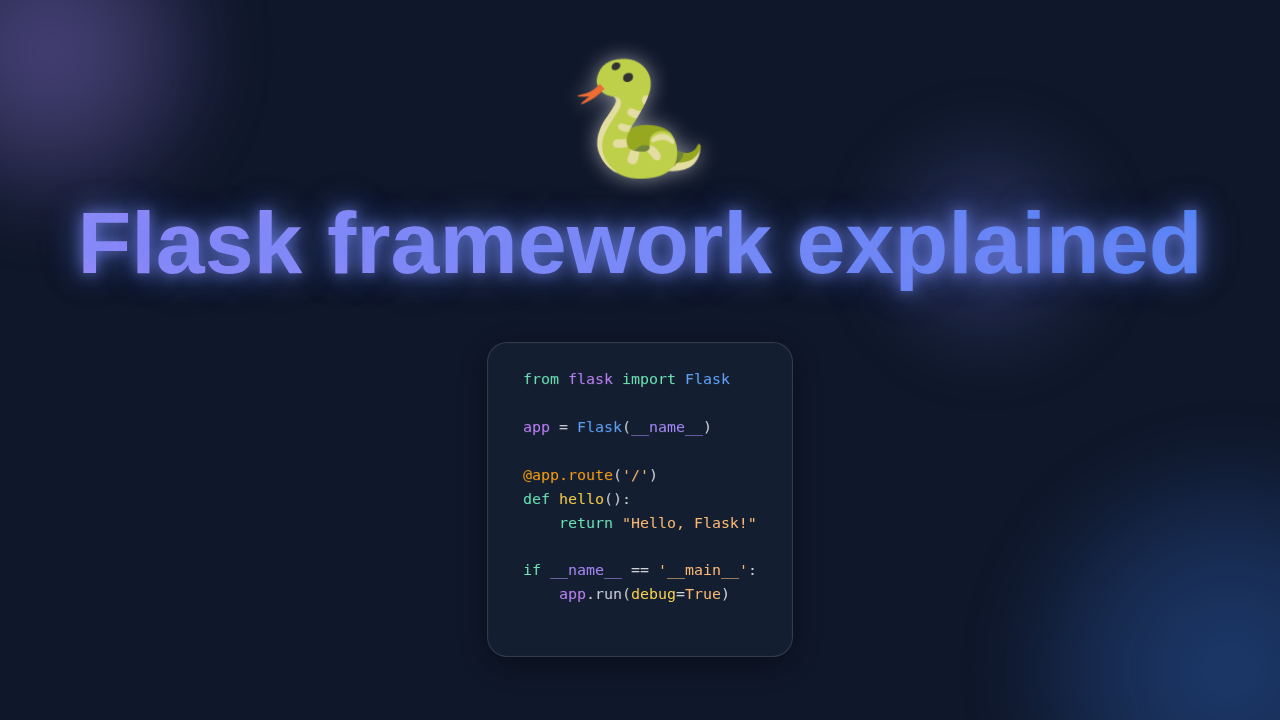
Flask Framework Explained: UI/UX Blog Thumbnail
Hey there, pro web developer in the making! Have you been hearing about web frameworks and felt a little overwhelmed? You’re not alone. The world of web development can seem like a jungle of complex tools and endless choices. But what if I told you there’s a super friendly, super powerful way to build web applications using Python?
Many beginners think building a website needs tons of intricate code. You might imagine giant systems with a million moving parts. Well, sometimes that’s true. But often, you just need something elegant, quick, and easy to understand. That’s exactly where Flask comes into play. It’s like your favorite, reliable toolbox – everything you need, nothing you don’t.
What is Flask Framework Explained?
Let’s dive right into what makes Flask so special. At its heart, Flask is a microframework for Python. What does “micro” mean here? It means Flask provides the absolute essentials for building web applications. It gives you the core structure to handle web requests, route URLs, and manage data from forms. You get the basic foundation, and you add everything else you need.
Think of it this way: some frameworks are like a fully furnished apartment. They come with all the furniture, appliances, and even decorations. Flask, on the other hand, is a sturdy, well-built house structure. You get to pick your own furniture, appliances, and decor. You have total control over your space. This approach is a huge reason why developers everywhere love its simplicity. It’s powerful, yet incredibly lightweight, offering you unparalleled freedom to craft your web projects exactly how you imagine them.
Top Tips: Why Developers Adore the Flask Framework Explained
1. It’s a Microframework, Not a Monolith
The term “microframework” might sound limiting, but it’s actually a massive benefit. Flask handles the core web application logic. It routes your URLs to Python functions. It helps you render web pages. However, it doesn’t force specific database layers or authentication methods on you. You decide what tools you want to use for those parts. This means less overhead and faster development.
Real-world example: Imagine you are building a custom drone. A “monolith” framework might give you a complete, pre-built drone with a specific camera, battery, and flight controller. Flask, instead, gives you a robust chassis and motor mounts. You then pick your favorite camera, the battery with the exact flight time you need, and the flight controller that offers the features you want. You tailor it perfectly to your mission.
Flask’s microframework nature means you get powerful essentials without the bloat. You are the architect, not just a decorator.
2. You Get to Choose Your Tools
This flexibility is one of Flask’s biggest selling points. You are free to integrate almost any Python library. Need to work with databases? Pick SQLAlchemy or Peewee. Want to handle forms? Try Flask-WTF. Building a REST API? Flask-RESTful is an option. You are not locked into specific components. This gives you immense power.
Real-world example: Think about setting up a high-end music studio. A “batteries-included” framework might come with a complete soundboard, specific microphones, and fixed recording software. Flask is like a professional studio space with excellent acoustics and power connections. You bring your favorite analog mixer, your specific condenser microphones, and the digital audio workstation that fits your workflow best. Every piece is exactly what you prefer.
3. Easy to Learn, Fast to Start
For beginners, Flask is incredibly approachable. Its small core means fewer concepts to master initially. You can get a basic web application running in just a few lines of code. This quick success builds confidence! The documentation is clear and concise, too. You won’t get lost in endless configuration files.
Real-world example: Learning to drive a simple go-kart versus a formula one race car. The go-kart has steering, gas, and brakes – you learn quickly and have fun immediately. The race car has complex aerodynamics, multiple gear paddles, and advanced telemetry. Flask is your go-kart for web development. You can even use it to build tools that interact with other services, just like you might use the Python Requests Library Explained to fetch data from APIs easily.
4. Robust for Small to Medium Projects
Don’t let the “micro” fool you. Flask is perfectly capable of handling significant workloads. Many companies use Flask for their internal tools, APIs, and even public-facing websites. It’s efficient and can scale up effectively when combined with appropriate deployment strategies. You can build substantial applications without it feeling clunky.
Real-world example: Consider a boutique coffee shop. It’s not a massive chain, but it serves hundreds of customers daily with complex custom orders. Flask is like that efficient, well-designed coffee shop. It handles many simultaneous orders smoothly because its system is lean and optimized. It manages customer requests (like an HTTP method submitting a form) with precision, making sure everyone gets exactly what they asked for without delay.
5. Amazing Community Support
When you hit a snag (and you will, that’s part of learning!), you’re not alone. Flask has a huge, active community. You’ll find countless tutorials, Stack Overflow answers, and helpful discussions. Many community-contributed extensions also simplify common tasks. This support network is invaluable for new developers.
Real-world example: Imagine you’re building a complex LEGO set. If you get stuck, you have access to official guides, online forums with fellow builders, and even YouTube videos showing step-by-step solutions. This collective knowledge base helps you overcome any challenge and finish your creation. Flask offers you that same level of collaborative assistance.
6. Perfect for APIs and Backends
Because Flask is so lightweight, it excels at building Application Programming Interfaces (APIs). These are the digital connectors that allow different software systems to talk to each other. If you’re creating a mobile app that needs to fetch data from a server, Flask is a fantastic choice for that server-side logic. It’s fast and resource-friendly.
Real-world example: Think of a fancy restaurant where the chefs (backend API) prepare specific dishes (data) in the kitchen. The waitstaff (your frontend or mobile app) just places an order, and the kitchen efficiently prepares and sends out the requested items. Flask is like that efficient kitchen, ready to serve up exactly what your frontend asks for without any unnecessary fuss.
7. Integrates with Anything Python
Since Flask itself is a Python library, it plays incredibly well with other Python libraries. Need to process images? Use Pillow. Want to perform data analysis? NumPy and Pandas are your friends. This seamless integration means you can leverage Python’s vast ecosystem directly within your web application. You’re not reinventing the wheel.
Real-world example: Consider a master carpenter using a power drill. The drill itself is a versatile tool. But you can attach different bits – a screwdriver bit, a sanding bit, a wire brush bit – to perform many specific tasks. Flask is like the power drill. You can easily attach any Python “bit” you need, perhaps even integrating powerful web scraping tools. For example, you might use Flask to present data gathered by tools discussed in BeautifulSoup vs Scrapy: Web Scraping Tools Compared.
Dive Deeper: More Reasons to Love Flask Framework Explained
Bonus Tip: Testing is a Breeze
Testing your code is crucial for building robust applications. Flask makes this surprisingly easy. It provides a built-in test client that lets you simulate requests to your application without needing a live server. You can quickly check if your routes respond correctly, if your forms validate, and if your data processing works as expected. This feature saves you tons of debugging time.
Real-world example: Imagine you are designing a complex machine, like a new car engine. Instead of building the entire car and then seeing if the engine starts, you can use a simulator. This simulator allows you to feed in different conditions – varying fuel mixtures, temperatures, pressures – and see how the engine components respond virtually. Flask’s test client is that simulator. You can test your application’s routes and data handling, such as ensuring a user login form sends the right data to the server (you can read more about HTML Forms Best Practices to see how forms typically work), all without needing to deploy your code live. It helps you catch errors early, preventing broken links and poor user experiences, much like a good Broken Link Checker prevents errors on a live site.
Easy testing means you can build with confidence, knowing your web app will behave exactly as you intend.
Ready to Build with Flask?
So, there you have it! Flask is a fantastic choice for any aspiring web developer. You now know it’s a powerful, flexible, and beginner-friendly Python web framework. Its simplicity empowers you to build amazing things without getting bogged down in unnecessary complexity. You control your project, and you learn quickly.
Whether you’re creating a small personal website, a robust API, or an internal business tool, Flask provides the perfect foundation. You get to unleash your creativity with Python’s full power. Start experimenting today. You’ll be amazed at what you can create!